
1
Unexpectedly
Unexpectedly higher water usage
Understand the signs →Phone-first help for homeowners dealing with hidden water leaks beneath a concrete slab. Learn the warning signs, detection methods, repair options, cost factors, insurance questions and local service considerations before you call.
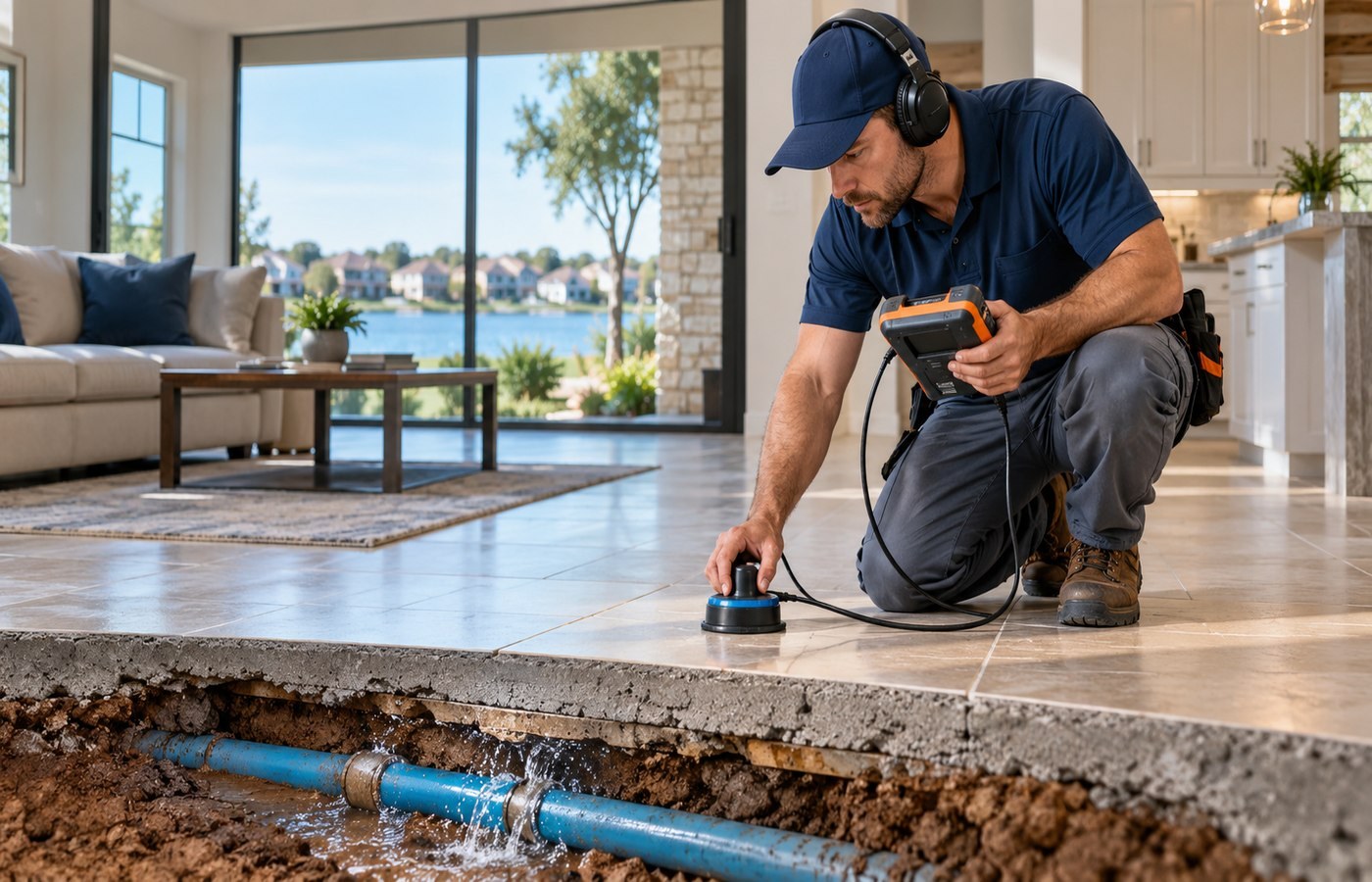
A leak below the slab may not announce itself with visible standing water. Several clues can point toward a plumbing problem, but no single symptom proves that a slab leak is the cause.
Unexpectedly higher water usage
Understand the signs →A water meter that moves when fixtures are off
Understand the signs →Warm or unexpectedly damp floor areas
Understand the signs →This clue is more useful when it appears with other symptoms or a measurable change in water use.
This clue is more useful when it appears with other symptoms or a measurable change in water use.
This clue is more useful when it appears with other symptoms or a measurable change in water use.

Good diagnosis is a process. Depending on the plumbing layout and symptoms, a professional may use pressure checks, acoustic listening, thermal observations, electronic locating or targeted confirmation.
The method depends on where the leak is, how the line is routed, the condition of the piping, what access is feasible and what level of disruption makes sense for the property.
Open only the area needed to reach a confirmed leak and repair the affected section.
Compare options →Create targeted interior access when the leak is located under finished space and another access route is not practical.
Compare options →Create access from outside the structure when site conditions make tunneling appropriate.
Compare options →Route a new line through an alternate path when repeated under-slab problems or access constraints justify it.
Compare options →Diagnosis, access, pipe condition, repair method, restoration and job complexity all matter. Avoid fake “average prices” and ask for a scope that explains what the number includes.
Read the Little Elm cost guideTexas policy forms and endorsements vary. Review your actual policy and separate the failed system from resulting damage when discussing a claim.
Read the Texas insurance guideUse the location layer to move from a broad Little Elm slab leak search to a neighborhood-specific guide without inventing a separate office or making unsupported property claims.
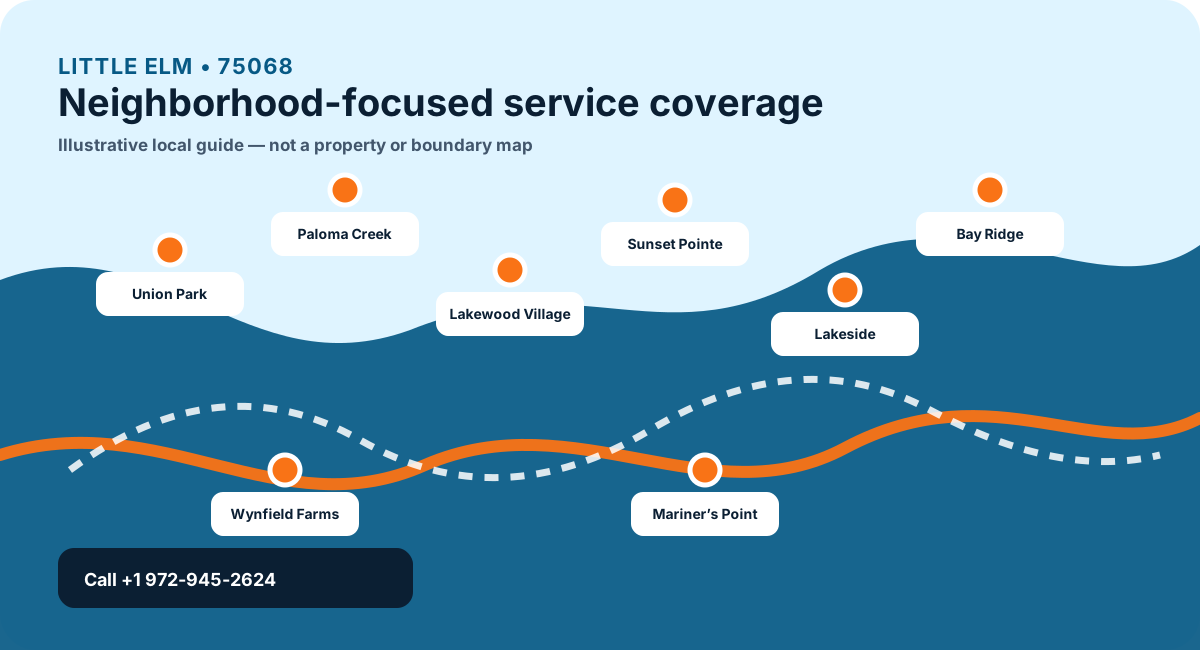
Every supplied neighborhood candidate is represented in the local content layer. Each page focuses on a distinct local decision angle while linking back to the core repair, detection, cost and insurance guides.
Browse all 42 neighborhood guidesCore services are separated where the search intent is distinct enough to justify a dedicated page.
Find the likely leak zone before deciding how much access is needed.
Learn more →Targeted interior access for a confirmed leak location when excavation is appropriate.
Learn more →A new plumbing route may be considered when the original under-slab path is impractical.
Learn more →A specialized option that must be matched to pipe condition, diameter and access.
Learn more →Exterior-access tunneling can sometimes reduce interior flooring disruption.
Learn more →Address moisture after a leak with a repair-and-restoration workflow.
Learn more →The site covers the full homeowner search journey instead of treating every keyword as a separate page. Supporting guides connect symptoms, testing, repair methods, cost, insurance and local service.
High water bills, meter movement, floor changes, pressure and running-water sounds.
Read symptom guide →Pressure, acoustic, thermal, electronic and targeted confirmation topics.
Explore detection →Spot repair, excavation, tunneling, rerouting and broader repiping considerations.
Compare methods →Quote scope, restoration, documentation and policy-specific coverage questions.
Review cost factors →Yes. A leak under a slab can be hidden. Changes in water usage, running-water sounds, pressure changes or localized floor conditions may justify professional testing, but these clues can have other causes.
No. Depending on where the leak is and how the plumbing is routed, options can include targeted interior access, exterior tunneling or an alternate rerouted line.
A professional investigation may combine visual clues, pressure testing, acoustic methods, thermal observations, electronic locating and targeted confirmation. The exact sequence depends on the symptoms and plumbing system.
If safe and practical, reduce water use and consider the main water shutoff if there is active uncontrolled flow. Document the symptoms and call for professional assessment.
Coverage depends on the actual policy, the cause of loss, the type of damage and any applicable endorsement. Texas Department of Insurance materials show that slab/foundation and water-damage endorsements can change coverage, so review your policy and speak with your insurer.
Each location URL is a dedicated local-service page. Neighborhood names are used as service-area locators; property-specific conditions still need to be verified during actual service.
Call the local phone line to discuss the symptoms, location and next practical step.